Optoelectronics / Integrated product systems
Light, Signal and Control—Engineered as One System
Optoelectronic products depend on the relationship between optical paths, sensing interfaces, electronics, embedded control and product mechanics. ROCKSAND develops those relationships as one coordinated architecture.
- 01 / OPTICAL DOMAIN
Optical System Integration
Translate optical intent into an integrated path with sensing and mechanical interfaces.
- Optical path definition
- Component relationships
- Alignment strategy
- 02 / PRODUCT ENVELOPE
Compact Product Architecture
Organize optical, electronic and mechanical elements within product-level constraints.
- Architecture partitioning
- Interface planning
- Integration sequence
- 03 / CONTROL DOMAIN
Electronics & Embedded Control
Coordinate sensing electronics and embedded behavior around the optical system.
- Sensor interfacing
- Embedded control
- System communication
- 04 / SIGNAL DOMAIN
Signal & Data Processing
Develop acquisition and processing paths that support usable system output.
- Signal acquisition
- Local processing
- Data handling
- 05 / REFERENCE / VERIFY
Calibration & Verification
Plan calibration references and verification steps around system behavior.
- Calibration method
- Functional verification
- Result review
- 06 / BUILD / REPEAT
Design for Manufacturing
Consider assembly, alignment, testing and repeatability while the architecture is formed.
- Assembly planning
- Test access
- Production transfer
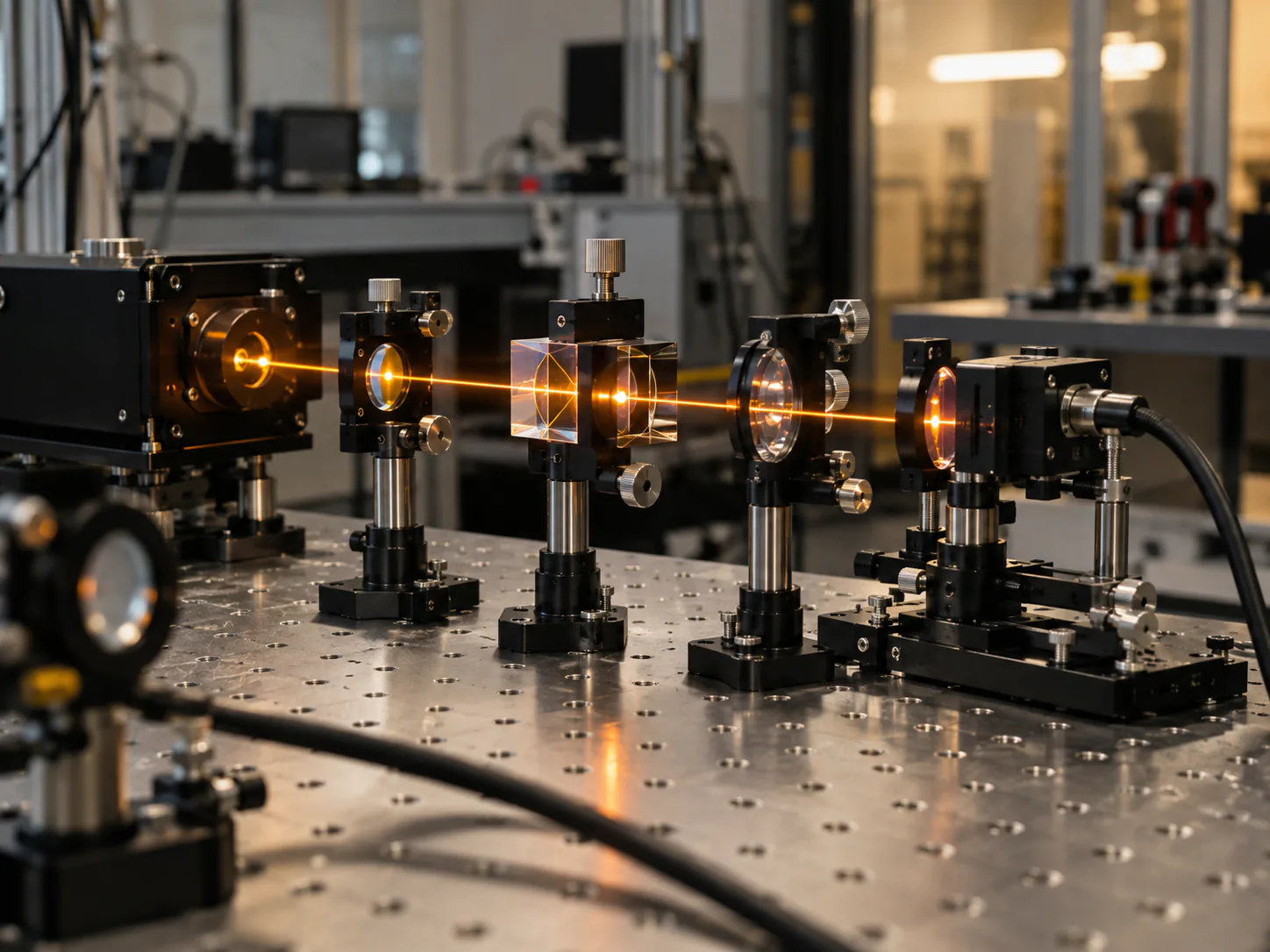
System integration path
An optical path becomes a product path
Each domain is developed against shared interfaces, reference points and verification intent—not as an isolated subsystem.
- 01Optical intent
- 02Sensor plane
- 03Electronics
- 04Embedded control
- 05Processing
- 06Verified output
Calibration logic
Reference before result
Calibration and verification are treated as part of the product architecture so that system behavior can be assessed consistently during integration and production.
- 01Defined datum
- 02Controlled configuration
- 03Functional reference
- 04Recorded result
Optical product engineering